A beauty routine is no longer just about stacking products in a fixed order. Formulations are evolving, gestures are simplifying, and some habits once considered standard are losing ground to new approaches focused on skin quality rather than makeup coverage. Here are the beauty trends that deserve a place in your daily life.
Skin prep before makeup: the beauty trend redefining the routine
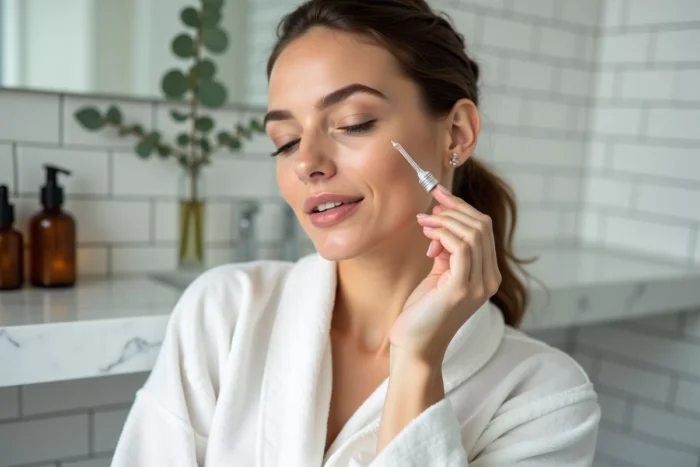
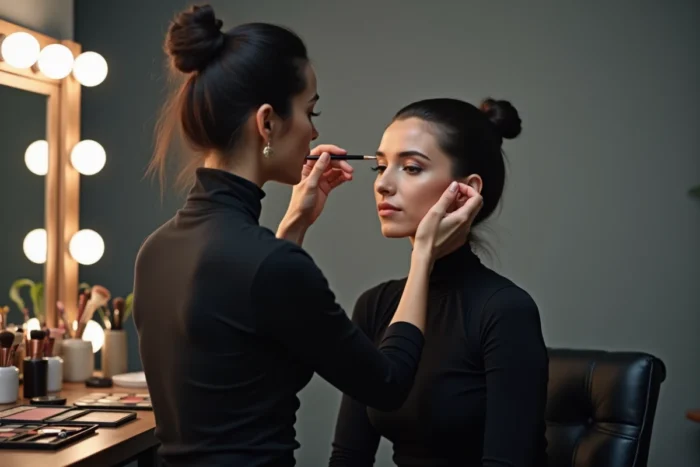
The concept of skin prep involves preparing the skin like a canvas before any makeup application. The hashtag #skinprepformakeup has over 122 million views on TikTok, a sign that this approach has moved beyond niche status to become a cultural reflex.
Specifically, skin prep relies on a precise sequence: gentle cleansing, hydrating or illuminating serum, cream suited to skin type, and then sun protection. Foundation or BB cream comes only at the last step, on a base that is already smoothed and plumped.
The result is game-changing. A prepared complexion holds pigments better, reduces touch-ups throughout the day, and provides a more natural finish. Several brands now offer serums specifically formulated for this intermediate step between skincare and makeup, with textures that dry quickly without leaving a greasy film. To explore other avenues on this type of approach, the beauty page on Autour de Chloé gathers selections tailored to different skin needs.
Full face without mascara: rethinking facial makeup
For a long time, mascara was the product that no one questioned. The micro-trend Full Face, No Mascara, which emerged on TikTok and Instagram, proposes a full face of makeup while leaving the lashes bare or minimally done.
The idea is not about minimalism. The complexion, lips, brows, and blush remain highly worked. The shift is towards the texture and luminosity of the skin rather than the eyes.
What this choice reveals about current routines
Removing mascara forces one to pay more attention to the quality of the complexion. An uneven skin texture or lack of radiance becomes more noticeable when the eyes are not “opened” by black lashes. This constraint encourages investment in targeted facial treatments (gentle exfoliants, vitamin C serums) rather than additional layers of makeup.
The complexion becomes the center of the look, not just a support. This is a reversal of priorities that directly influences product choices in the makeup bag.
Hybrid products: when makeup contains skincare actives
The boundary between skincare and makeup blurs with hybrid products. A foundation enriched with hyaluronic acid, a tinted lip balm containing SPF, a blush infused with niacinamide: these formulations combine two functions in a single step.
The interest goes beyond time-saving. Applying fewer layers reduces the risk of pore blockage and simplifies makeup removal at the end of the day. Sensitive or reactive skin types find a direct benefit here.
- Foundations with hydrating actives replace daytime creams for some users, provided the formula is suitable for their skin type
- Tinted lip balms with sun protection help protect an often-overlooked area in the SPF routine
- Tinted serums offer light coverage while delivering actives like vitamin C or zinc
The trap to avoid: an hybrid product does not replace targeted skincare if your skin has a specific need (acne, marked dehydration, pigmentation spots). The concentration of actives is generally lower in a hybrid product than in a dedicated serum.
Early anti-aging routines: replicating aesthetic medicine at home
Daily beauty routines increasingly incorporate gestures inspired by aesthetic medicine, starting as early as one’s twenties. Portable microcurrents, pocket LED devices, microneedle patches: these tools were once reserved for clinics. Their home versions are becoming more mainstream.
What works and what is marketing hype
Red LED devices have a more robust research base than other gadgets. Regular use seems to improve firmness and radiance, provided a sustained frequency of use is maintained over several weeks.
Microneedle patches dissolve actives directly into the epidermis, which can enhance the penetration of certain ingredients like hyaluronic acid. However, the results remain modest compared to a professional session.
The real risk lies in the accumulation of active gestures. Combining a microcurrent device, a chemical exfoliant, and retinol on the same night can weaken the skin barrier. It’s better to space out treatments and observe the skin’s reaction between each addition.
Lip and complexion trends: the dominating textures
In terms of pure makeup, creamy and melting textures are taking precedence over matte and powdery finishes. Vinyl lipsticks, cream blushes, and liquid highlighters create a “wet skin” effect that extends the logic of skin prep.
- Lip oils offer color and hydration without a drying effect
- Liquid blushes blend better into prepared skin than powder blush on dry skin
- Oil-based highlighters provide a subtle glow, far from the glittery effect of previous years
This evolution towards “all creamy” favors normal to dry skin. Oily skin types will need to adapt with a mattifying base on the T-zone to prevent makeup from sliding throughout the day.
Current beauty trends converge on a single principle: fewer layers, more care integrated into makeup. Skin quality takes precedence over coverage. Whether you adopt skin prep, hybrid products, or simply more melting textures, the common thread remains the same: treat the skin first, then apply makeup.