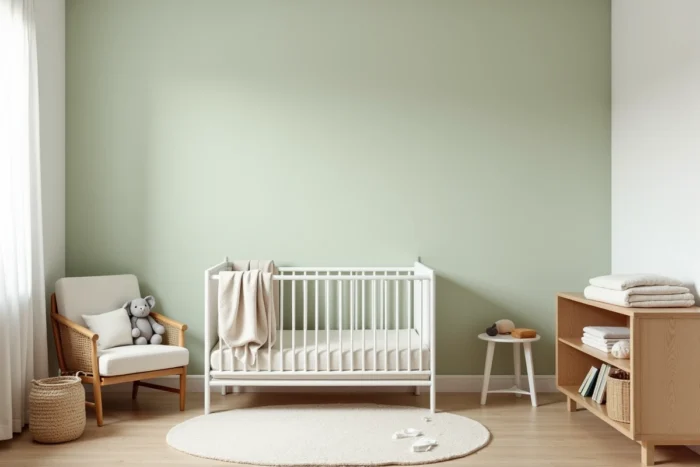
A crib delivered in kit form, a dresser still in its box, and maternity leave approaching: we all know that moment when the baby’s room looks more like a warehouse than a cocoon. The real challenge is not buying everything, but choosing furniture and accessories that will be useful beyond the first few months.
The baby room equipment deserves a pragmatic approach, focused on safety, durability, and the actual time parents have on a daily basis.
Transformable furniture: anticipating ten years from the first purchase
We often buy a 60×120 crib for the newborn, then a 90×190 bed three years later. This succession is costly and cumbersome. A transformable bed that transitions from baby to child size absorbs this change without the need to purchase a new structure. The mattress base extends, the bars are removed, and the same base supports the child until they are seven or eight years old.
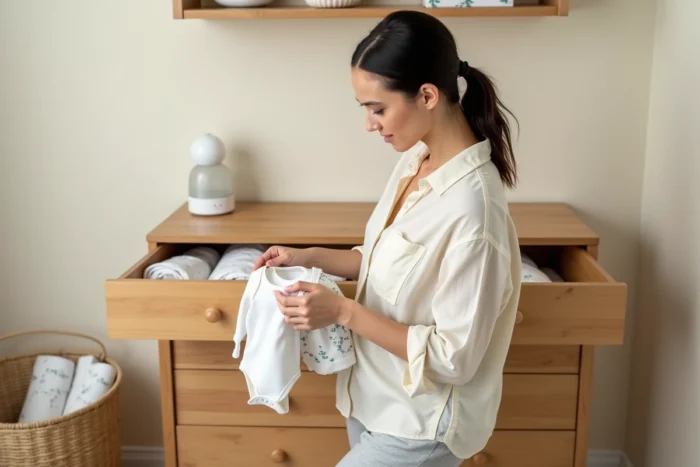
The same reasoning applies to the changing table dresser. A removable changing pad attached to a standard dresser allows you to reclaim a classic storage piece as soon as floor changes take over. You gain a piece of furniture instead of throwing one away.
To compare the models and formats available, you can check the equipment available on Niddou before finalizing your choice on a specific range.
Closed wardrobe or open shelves
With an infant, open shelves are practical: you can grab a onesie in a second. But as soon as the child stands up, they empty every shelf within reach.
A closed wardrobe with a low rail (at child height around two years) remains functional for longer. The principle is constant: closed storage ages better than open storage in a room shared with a mobile child.
Baby room safety: recent standards and concrete pitfalls
Since 2025, inspections on cribs have intensified around the European standard EN 716. Consumer authorities particularly check for solvent-free paints, anti-pinch devices, and the absence of volatile organic compounds (VOCs) in finishes. This means that a crib purchased second-hand before this date may not meet current requirements.
The 2025-2026 trend known as “rounding the corners” is not just aesthetic. Manufacturers are generalizing furniture without sharp edges, rounded corners, and curved headboards, designed for both the safety of toddlers and a soft aesthetic. When choosing a dresser or bedside table, checking for the absence of protruding corners at child head height can prevent many scares around twelve months.
- Check for the “compliant with EN 716” label on the crib, including second-hand
- Prefer finishes certified VOC-free, especially for painted furniture
- Secure any shelf or dresser exceeding the child’s standing height to the wall (an anti-tip kit costs a few euros and takes five minutes to install)
- Keep the crib away from windows, electrical outlets, and corded blinds
Mattress and bedding: the area where you shouldn’t compromise
The mattress is the only item in the room that comes into direct contact with the baby for several hours a day. A firm, breathable, and certified anti-dust mite mattress is essential. Look for an Oeko-Tex certification or equivalent, which guarantees the absence of harmful substances in textiles.
For bedding, two or three fitted sheets are sufficient at first. Bumpers are discouraged by most health professionals due to the risk of suffocation. A seasonally appropriate sleeping bag is a better alternative to a duvet and blanket during the first two years.
Canopy and wall decoration
The canopy is one of those enjoyable purchases. It creates a soft atmosphere but collects dust. If you install one, washing it every two weeks prevents it from becoming a nest for allergens. For wall decoration (stickers, frames, garlands), fix them out of reach of the crib: an object falling into the crib during the night poses a real danger.
Lighting and play area: two often overlooked aspects
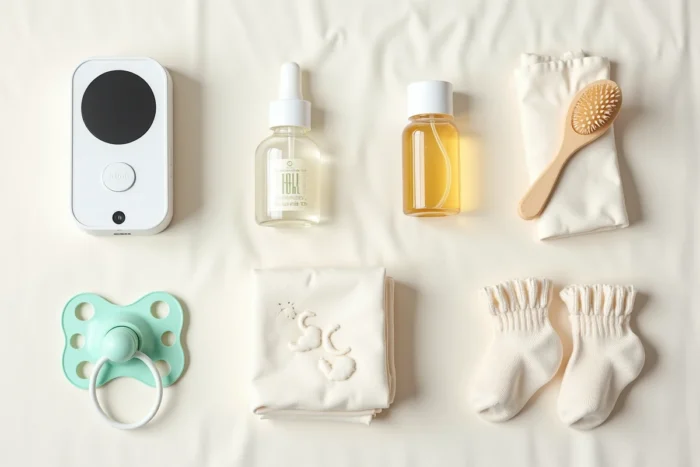
A baby room needs two distinct light sources. A warm night light for nighttime awakenings, and a main light source sufficient for changing and dressing. Dimmable models allow you to switch from one to the other without multiplying lamps.
For the play area, a play mat on the floor is enough for the first few months. You don’t need a playpen, a bouncer, and a gym all at once. A single clear space on the floor, secured by furniture attached to the walls, offers more freedom of movement than an accumulation of accessories.
- Ensure a free outlet near the changing area for the night light or baby monitor
- Keep at least two square meters of free floor space for the play mat, and then for free play
- Store toys in a chest or low bin rather than on high shelves, to promote autonomy as soon as they start walking
Designing a baby room that remains functional for several years relies on three initial choices: transformable furniture that won’t need replacing in eighteen months, materials that meet the latest safety standards, and a layout that leaves free space on the floor. It’s better to have a simple room with five well-chosen pieces of furniture than a room cluttered with accessories that will end up being dismantled before the first birthday.