
A raw denim, a white t-shirt, white sneakers. The outfit is clean, but it says nothing about you. Add a scarf tied over the shoulder, a minimalist watch, or a textured leather bag, and the silhouette tells a story. Fashion accessories work as visual markers: they direct the gaze, reveal choices, and transform a neutral outfit into a personal style.
Choosing an accessory by its material before its shape
Have you ever noticed that the same bag model can look luxurious or cheap depending on the leather used? The material of an accessory determines its longevity, its feel, and the impression it gives off. A silk scarf captures light differently than a polyester scarf, even with the same pattern.
This reflex applies to all pieces. A vintage brass bracelet does not send the same signal as a chrome bracelet. The former evokes craftsmanship, while the latter leans towards streetwear. Before looking at color or shape, touch the item. If you are ordering online, read the composition. An accessory whose material is consistent with the rest of your outfit creates a natural harmony that is perceived without analysis.
To explore pieces with detailed materials on each product page, you can visit www.carobleueviolette.fr for accessories and compare the textures offered.
Textile accessories and environmental regulations: what is changing
The French regulation on the environmental cost of textiles, which came into effect in October 2025, will become fully binding from October 2026 for brands displaying an environmental indicator on their product pages. A point rarely addressed in fashion guides: accessories are explicitly excluded from this obligation.
Bags, belts, scarves, hats, and textile jewelry are not subject to this eco-score, even when they contain textile components. The boundary between clothing and accessories is not always clear. A poncho, for example, can be classified in either category depending on its primary function.
For you, the consumer, this means two things:
- The absence of an eco-score on an accessory does not mean that the brand ignores sustainability; it simply means that the law does not yet require it for this category.
- Serious brands are starting to detail the composition and origin of their accessories to anticipate future obligations.
- Checking the product page remains the best reflex: origin of the leather, type of dye, place of manufacture.

Cap and chic style: the piece that has changed its register
The cap has long been confined to the sports or streetwear wardrobe. In 2026, it slipped into more dressed silhouettes. It can be seen worn with an oversized blazer, a flowing dress, or a deconstructed suit. This shift is visible in the selections of brands like Headoniste, which offer models designed for feminine and chic looks.
The cap works as a deliberate contrast. Worn with formal attire, it breaks the rigidity. Worn with casual wear, it structures the look. The choice of fabric makes a difference: a linen or boiled wool cap does not produce the same effect as a technical nylon model.
To make the cap work daily without falling into costume territory, keep the rest of the outfit understated. One offbeat element is enough. If you add large earrings and a patterned bag, the cap loses its role as a standout piece.
Building a look with a maximum of three accessories
Why three? Because the human eye struggles to retain more than three points of attention on a silhouette. A necklace, a belt, and a bag form a visual triangle that guides the gaze from top to bottom. Add a scarf, earrings, and a brooch, and the gaze no longer knows where to settle.
Three well-chosen accessories are better than an accumulation of trendy pieces. Here’s how to select yours:
- Choose a dominant accessory (the one that catches the eye first), such as a brightly colored bag or a large-faced watch.
- Add a secondary accessory that shares a common element with the first (same metal tone, same color family).
- Complete with a discreet accessory that does not compete with the first two (a thin ring, a simple belt, classic sunglasses).
This system works equally well for a casual look as for an office outfit. The coherence between the pieces matters more than their individual price.
Adapting your accessories to the season without buying everything new
The classic trap is to buy an accessory based on seasonal trends, only to stop wearing it six months later. Favor pieces whose materials transcend the seasons: a lightweight cotton scarf works from spring to autumn, a textured leather bag transitions from summer to winter without looking out of place.
A versatile accessory is recognized by its neutral color and natural material. A camel bag, an ecru scarf, a leather strap watch fit into most outfits without forcing the association. Reserve bright colors or bold patterns for one or two pieces that you embrace as signatures.
Sustainable fashion accessories: the concrete criteria to check
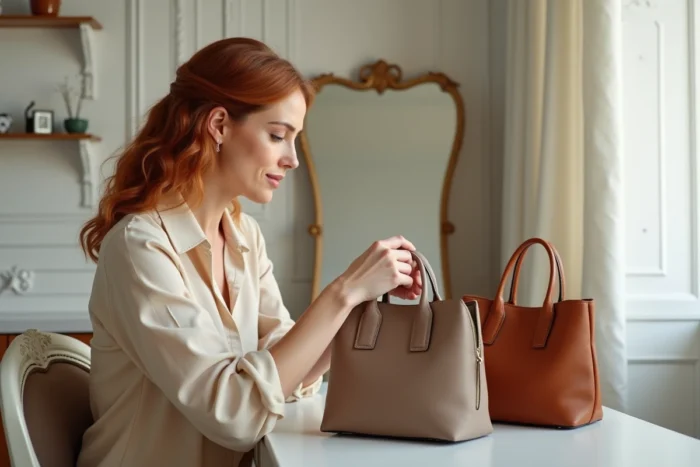
The durability of an accessory is not limited to a label. Before buying, examine three concrete elements. First, the finishes: regular stitching, sturdy clasps, lining present on a bag or structured hat. Next, the brand’s transparency about the origin of the materials. Finally, the possibility of repair: a piece of jewelry with a replaceable clasp or a bag with changeable handles lasts longer than a disposable model.
A durable accessory costs more at purchase but is cheaper per use. A bag used every day for three years costs just a few cents per use. A trendy bag abandoned after two months remains a sunk cost, regardless of its initial price.
Everyday style does not depend on the number of pieces in your accessory drawer. It relies on the quality of materials, the coherence of combinations, and the ability to wear a piece regularly rather than excessively. A scarf that you tie differently each week tells more than an entire collection left in its packaging.