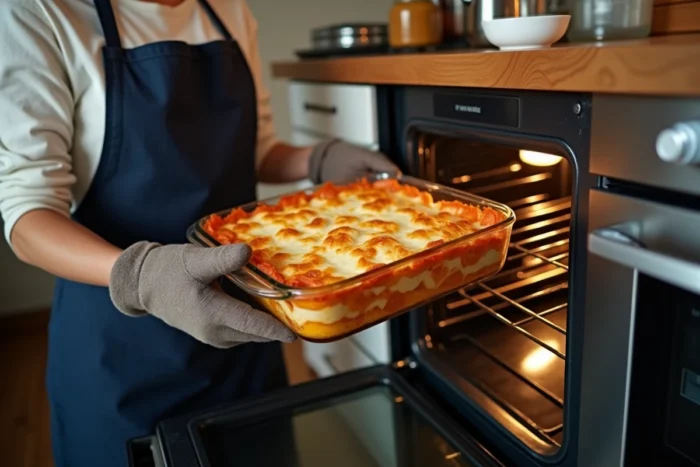
Reheated lasagna presents a specific thermal problem: the layers of pasta absorb the residual moisture from the béchamel and tomato sauce during resting in the refrigerator. Reheating then amounts to rehydrating a mixture that has already captured some of its free water. Without an appropriate method, the top burns while the center remains lukewarm.
Thermal gradient and moisture transfer in a thick lasagna dish
A lasagna dish over five centimeters thick concentrates the difficulty: heat penetrates through the exposed surfaces, but the core remains insulated by the layers of pasta that form multiple barriers. The thicker the dish, the greater the risk of surface drying out before the center reaches a satisfactory temperature.
We recommend taking the dish out of the refrigerator at least half an hour before reheating. This temperature rise reduces the gap between the cold core and the exposed surface, which decreases the total oven time and limits evaporation.
To learn how to reliably reheat lasagna in the oven, the most determining variable remains the thickness of the dish, not the recipe itself. A thin vegetarian lasagna and a thick bolognese do not support the same protocol.
Reheating lasagna in the oven: low temperature vs. standard temperature
Most guides recommend 180 °C. This is an acceptable compromise for a dish taken out of the refrigerator, but reheating between 120 °C and 150 °C yields better results on texture. The temperature rise is slower, the internal moisture redistributes instead of evaporating abruptly, and the upper layers do not dry out before the core is hot.
The oven time increases, of course. Expect a significantly longer duration than at 180 °C. But the gain in texture justifies the wait, especially for lasagnas with generous béchamel or those containing water-rich vegetables.
Cover, then uncover: the sequencing of aluminum foil
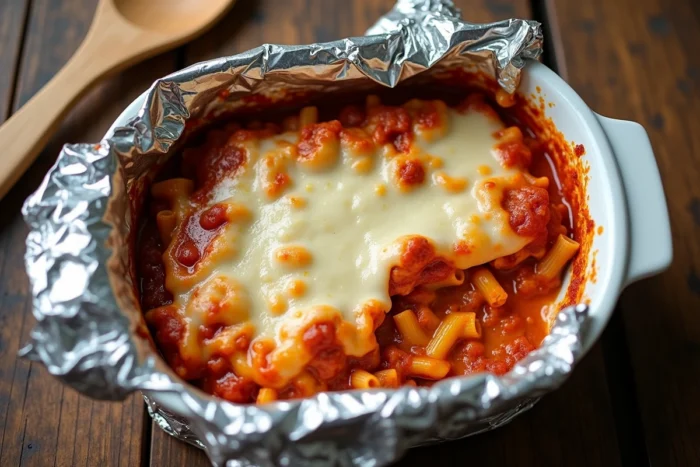
Covering the dish with aluminum foil during the first phase of reheating traps steam and prevents the top from crusting. Removing the foil for the last few minutes of cooking allows for a golden gratin without sacrificing the softness of the inner layers.
This sequencing is the most reliable technique to reconcile even reheating and a gratin surface. We apply it systematically, regardless of the chosen temperature.
Adding moisture before reheating: what to add and where
Adding liquid before baking compensates for the water absorbed by the pasta during resting. Three options work well:
- A few tablespoons of water spread over the top of the dish, along the edges. The water turns into steam and hydrates the upper layers without diluting the flavors.
- A drizzle of fresh tomato sauce or béchamel on the surface. This addition provides both moisture and flavor, compensating for the sauce absorbed by the pasta.
- A damp brush applied to the edges of the dish, where drying always starts first. The edges are the areas most exposed to the radiant heat of the oven.
Do not pour the liquid in the center of the dish: it would seep between the layers and disrupt the assembly. Target the edges and the surface.
Reheating frozen lasagna: adapting the method
Lasagna that has been frozen requires a different treatment. The water trapped as ice crystals is released during defrosting, which moistens the pasta unevenly. The peripheral areas defrost first and risk cooking while the central block is still frozen.
The protocol we observe as the most consistent: reheat covered at 150 °C for an extended period, without trying to speed up by increasing the temperature. A gradual rise allows the crystals time to melt without creating pockets of water between the layers.
Food safety: the core temperature
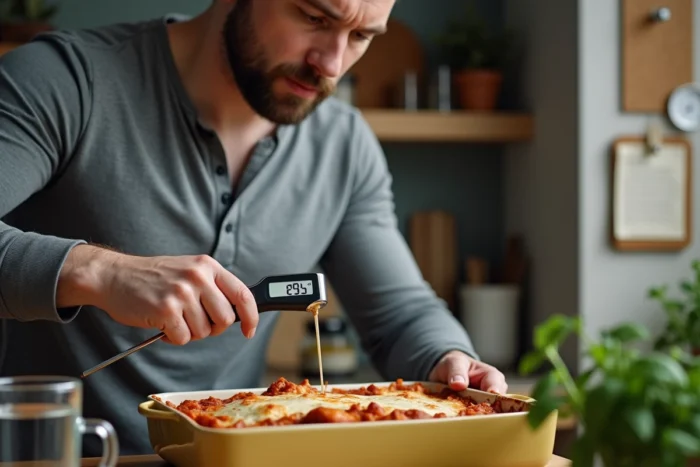
Proper reheating requires reaching 74 °C at the core before serving. This is a food safety requirement, not just a simple recommendation. A probe thermometer inserted into the center of the dish remains the only reliable tool to check this threshold, especially on a thick dish where the surface appearance says nothing about the internal temperature.
Steam oven and SteamReheat mode: an alternative to dry oven
Ovens equipped with a steam mode or SteamReheat combine steam injection and dry heat. This type of program is specifically designed to reheat without drying out: the steam maintains ambient humidity in the cavity, which significantly reduces evaporation on the surface of the dish.
On a gratin of lasagna, the result is noticeable: the edges remain soft, the béchamel does not form a dry crust, and the gratin can be adjusted by switching to bottom-top heat for the last few minutes. If your oven offers this function, it advantageously replaces the classic aluminum-oven method.
Microwave: a quick fix, not a method
The microwave heats by molecular agitation of water, creating hot spots and lukewarm areas. On an individual portion, it can work at reduced power and with a cover. On a whole dish, the result remains inferior to the oven, with burning edges and an uneven center.
If you only have the microwave, reduce the power to about half and cover the container. Add a tablespoon of water on top before starting. This is not a proper lasagna reheating, but it is the least bad version of this option.
Lasagna reheats better at low temperature, covered, with targeted moisture added to the edges. The aluminum sequencing followed by gratin, combined with core temperature control, yields a result close to freshly cooked dish. The steam oven further simplifies the procedure for those who have it.