A website dedicated to Brittany can be much more than an events calendar or a tourist guide. When designed as an editorial publication rooted in the region, it becomes a platform for showcasing people, projects and industries that national media rarely cover.
The key question is how to approach it: how can you structure such a website to reflect the true diversity of Brittany, from Brest to Vannes, without relying on maritime or culinary clichés?
Editorial direction and the diversity of talent in Brittany
The most common pitfall for a regional website is to function like an institutional showcase. It features the same tech entrepreneurs, the same summer festivals and the same picture-postcard landscapes. The region’s diversity disappears behind a handful of familiar figures.
A website aiming to cover news from Brittany should define an editorial direction structured around themes, not name recognition. That means giving the same level of attention to a digital inclusion advisor in Ploufragan, an oyster farmer in the Gulf of Morbihan and a software developer in Rennes.
An online publication about Brittany can also connect individual profiles to changes in their industries. The Digital Sector Pact, signed by public authorities and professional associations in Brittany, supports skills development in digital professions. Linking a profile of a developer or designer to this broader initiative gives the article context and depth.
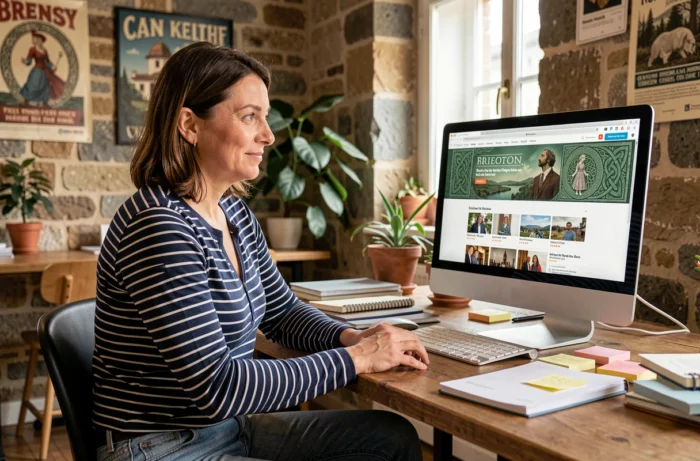
With this in mind, the new BreizhPower website – The 100% Breton magazine! organizes its sections around local news, career paths and community initiatives, covering all five Breton departments.
Content strategy for a Breton website: making stories reusable
Tourisme Bretagne has partnered with British media to present the region as an outdoor adventure destination, particularly outside peak season. This PR approach is based on a principle that can also be applied to an editorial website: create content that other media can easily reuse.
In practice, this involves several editorial and technical choices:
- Every article about a person or project includes a clear introduction to the person, background on their work and a way to get in touch, so journalists can use them as a source.
- Content is organized around cross-cutting themes (crafts, digital, agriculture, culture) rather than geography alone, so each town is not reduced to a single field.
- Formats vary: in-depth interviews, news briefs and industry features. A website that publishes only profiles will eventually become repetitive, even if the subjects vary.
This structure can also improve search engine rankings. A website whose articles target specific queries (for example, “digital craftsman Vannes” or “digital inclusion Brittany”) can attract qualified traffic that general-interest portals do not target.
Website architecture and local visibility on Google
A Breton website looking to showcase local talent should also plan its technical architecture with local SEO in mind. Visibility on Google for searches related to Brittany depends on practical decisions made from the outset.
Topic-based internal linking rather than geography alone
Many regional websites organize their content by department or town. That makes sense for a directory, but it can be limiting for a publication. Topic-based internal links create reading journeys that keep visitors on the site longer: an article about a craft brewer in Quimper can link to a feature on short food supply chains in Finistère, followed by a profile of a logistics specialist in Brest.
This type of architecture increases time spent on the site and sends positive signals to search engines.
Structured data and profile pages
To help a Breton talent appear in Google’s rich results, a website can add structured data (schema.org) to each profile, including the person’s name, location and field of work. These tags are not visible to readers, but they make it easier for search engines to index the content and display it as a rich result.
Beyond the tourist image: a website as a tool for regional development
Brittany has a well-developed digital ecosystem, with several French Tech labels (Brest+, Rennes St Malo, Nantes Tech) and a strong network of community organizations. An editorial website documenting this ecosystem plays a different role from a tourist office or an economic development agency.
The difference lies in the editorial approach. A tourist office promotes. A development agency provides support. A media outlet tells stories, asks questions and offers perspective. When a website covers the digital fortnight in Châteaulin or a Visa numérique training course in Ploufragan, it documents a social reality that institutional channels lack the time or format to cover in detail.
This role in documenting the region has tangible value for Breton businesses: a well-ranked article about local expertise attracts customers and partners that traditional advertising cannot reach. For the people featured, online visibility is often the first step toward professional recognition beyond their immediate network.
A website that covers news from Brittany thoroughly and consistently can become a trusted resource for local residents as well as journalists, recruiters and investors from elsewhere. The key is to resist the temptation to publish promotional profiles or disguised sponsored content, and to maintain editorial standards that give readers a reason to return.